
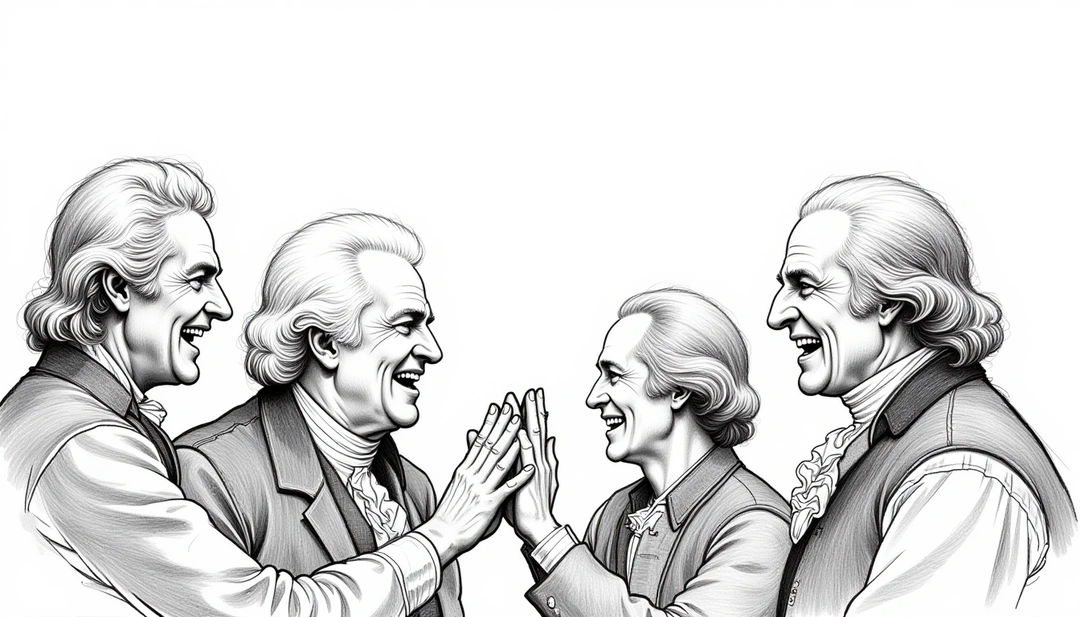
Happiness: The Goal of Life and Government
The word “happiness” held deep meaning for America’s Founding Fathers. To them, happiness was not a fleeting feeling or momentary pleasure. It meant living a life of virtue, moral excellence, and liberty within a well‑ordered community. They believed the chief aim of both the individual and the government was the achievement of true happiness.
This deep meaning probably comes as a complete surprise to the modern reader of the famous phrase in our Declaration of Independence “the pursuit of happiness” as an unalienable right.
What Did “Happiness” Mean?
In the 18th century, “happiness” was understood as moral fulfillment and peace of mind that came from living rightly. Without virtue, the founders believed, there could be no lasting joy. Noah Webster’s 1828 Dictionary defined “virtue” as “moral goodness; the practice of moral duties and abstaining from vice.”
The Role of Virtue in Happiness
Benjamin Franklin said, “…without Virtue Man can have no Happiness in this World.” In his view, happiness wasn’t found in wealth or luxury but in leading a virtuous life.
Likewise, John Adams explained that “All sober enquiries after truth, ancient and modern, Pagan and Christian, have declared that the happiness of man, as well as his dignity consists in virtue. Confucius, Zoroaster, Socrates, Mahomet, not to mention authorities really sacred, have agreed in this.”
To them, virtue was not simply a personal choice—it was the foundation of a strong and free society.
The Value of Occupation
Thomas Jefferson reminded his readers that “…it is neither wealth nor splendor, but tranquility and occupation which give happiness.”
Webster’s1828 Dictionary defines occupation as “The principal business of one’s life; vocation; calling; trade; the business which a man follows to procure a living or obtain wealth. Agriculture, manufactures and commerce furnish the most general occupations of life. Painting, statuary, music, are agreeable occupations. Men not engaged in some useful occupation commonly fall into vicious courses.”
Men and women who devoted themselves to such useful work found peace and meaning. Those who lacked occupation, however, risked idleness and vice. A productive life, guided by purpose and moderated by virtue, was the surest path to contentment.
The Inner Source of Happiness
George Washington observed that ” …happiness depends more upon the internal frame of a persons own mind—than on the externals in the world “ In other words, happiness arises from within—from self-control, sound judgment, and moral strength. Outer circumstances may change, but the happy person’s peace remains steady because it is anchored in virtue.
The Aim of Government
John Adams wrote “that that the happiness of society is the end of government, as all Divines and moral Philosophers will agree that the happiness of the individual is the end of man. He reasoned that a good government should protect citizens’ ease, comfort, and security—those conditions that allow people to live peaceful, virtuous, and fulfilling lives. In sum, the best form of government is one that promotes the happiness of the greatest number, not by providing pleasure, but by securing liberty and justice.
True Happiness
For America’s founders, true happiness came from more than comfort or pleasure. It was the harmony of a virtuous heart, a free mind, and a just society. When citizens pursue truth and goodness, and when government protects liberty and order, the happiness of all is advanced.
The Founders believed that this pursuit—the striving for a good life grounded in virtue—was both a personal duty and a national goal.
Dave Kluge
www.understandtheconstitution.com
Author of The People’s Guide to the United States Constitution. The book presents the original texts of the Declaration of Independence, Constitution, Bill of Rights and all amendments, with enough background, examples, and definitions to easily understand and read straight through these documents.