
Thomas Jefferson
Our Founding Fathers’ Government Based on Reason: A New Way of Thinking
Self-Evident
The words of the Declaration of Independence—“We hold these truths to be self-evident, that all men are created equal…”—are more than a call for freedom. They express a new philosophy, one that changed how people thought about government and truth itself.
Instead of building authority on kings or religion, the Founding Fathers based our new nation on reason—on what the human mind could see and understand for itself.
“Sacred and Undeniable”
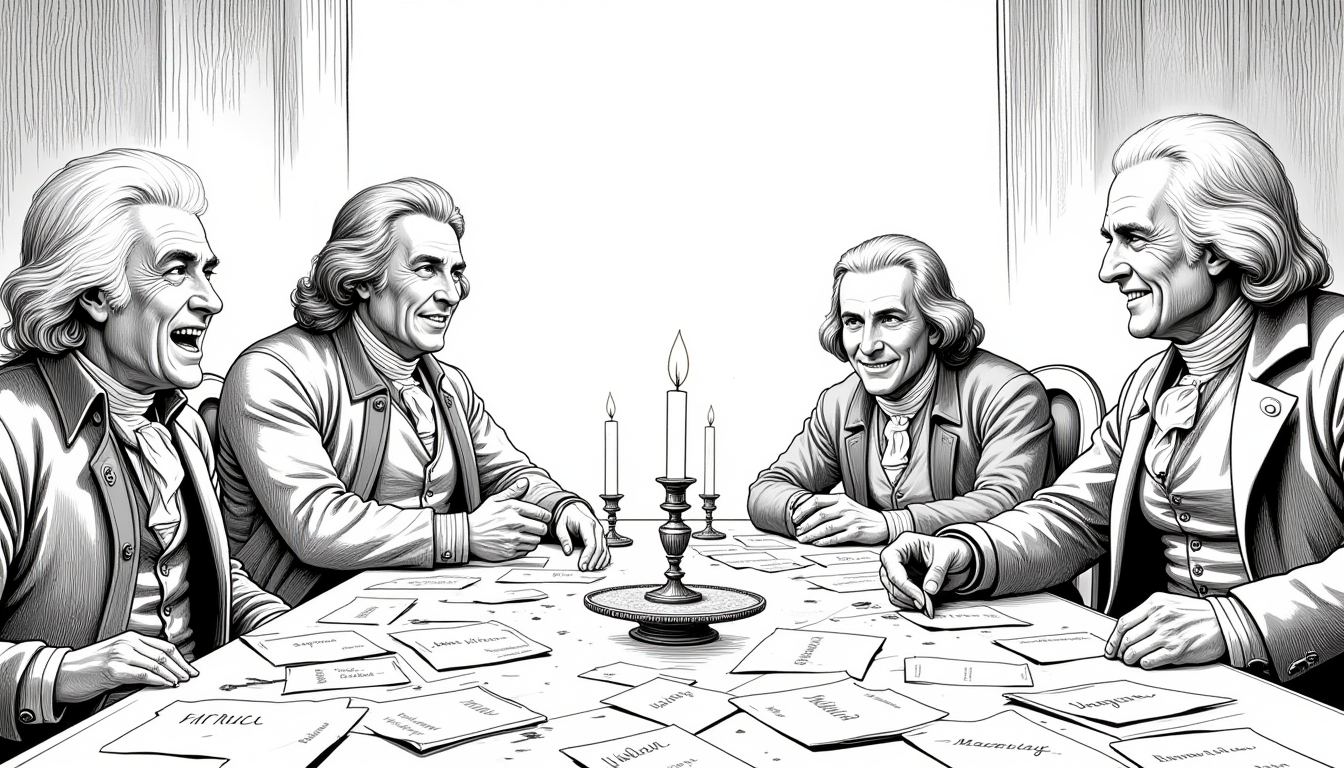
Thomas Jefferson at first chose different words. His original draft of the Declaration read, “We hold these truths to be sacred and undeniable.” Before the Declaration was finalized, Jefferson shared his draft with Benjamin Franklin. Franklin carefully took his quill, crossed out “sacred and undeniable,” and wrote “self-evident.”
That single change did more than alter a phrase. It transformed the foundation of the American Revolution—from one based on faith and divine authority to one grounded in the clear light of human reason.
What Does “Self-Evident” Mean?
To understand Franklin’s change, we need to look at the meaning of “self-evident.” In Noah Webster’s Dictionary of 1828, which reflected the language of that era, self-evident meant “evident without proof or reasoning; that produces certainty or clear conviction upon a bare presentation to the mind.”
In other words, some truths are so clear that the human mind recognizes them immediately—just as the eye recognizes light or the ear recognizes sound. No priest or monarch must declare them. They are truths any person can see by the power of thought itself.
From Faith to Reason
When Franklin replaced “sacred” with “self-evident,” he redirected the argument for independence. No longer did the colonists claim divine authority for their cause. Instead, they appealed to natural truth—discoverable by reason, open to all, and common to humanity.
Government, they said, must rest not on religion or royal birth, but on principles every thinking person can understand. Life, liberty, and the pursuit of happiness are not church doctrines or royal favors. They are natural rights—truths that exist as plainly as daylight and belong to every person by nature.
A New Way of Thinking
This shift in language reflected a shift in thought. America’s founders envisioned a government that trusted human understanding. They believed that through reflection, observation, and discussion, people could discover how best to live together in freedom.
In those few words—“We hold these truths to be self-evident”—Jefferson and Franklin expressed a new faith, not in divine command but in reason itself. Their exchange reminds us that the United States was founded not just by revolution, but by reflection.
It was an idea—a belief in the power of the mind—that gave birth to a nation.
Dave Kluge
Dave Kluge
www.understandtheconstitution.com
Author of The People’s Guide to the United States Constitution. The book presents the original texts of the Declaration of Independence, Constitution, Bill of Rights and all amendments, with enough background, examples, and definitions to easily understand and read straight through these documents.